_AZ_Initial.png)
_AZ_Initial.png)
WHAT IS MEDICARE?
Michael T Braden September 1, 2026 WHAT IS MEDICARE
WHAT IS MEDICARE
You may find yourself asking, What is Medicare? Medicare is the National Health Insurance program for individuals aged 65 and older and those who meet specific eligibility criteria.
Medicare consists of four parts. However, additional options are available for those who want higher coverage.
Medicare can be confusing if you are not adequately educated. That is where we come in. Below, we review the four parts of Medicare and how they work together to provide healthcare coverage.
THE FOUR PARTS OF MEDICARE
Most people have referred to Medicare as Alphabet Soup because of the way Medicare uses letters to describe different parts of Medicare coverage. Medicare consists of four parts. However, additional options are available for those who want more coverage.

DEFINITION OF MEDICARE
Medicare is defined as federal health insurance for people 65 or older, those younger than 65 with disabilities, and those with amyotrophic lateral sclerosis or end-stage renal disease.
Original Medicare, consisting of Part A and Part B, is the original Medicare program. These parts cover inpatient hospital care and medical care, respectively. Additionally, Medicare Parts C and D provide benefits that help
Medicare resembles group or employer coverage. Medicare Part C may include dental or vision coverage, whereas Medicare Part D provides prescription drug coverage.
Medicare is the most widely used health insurance program for individuals aged 65 and older. If you are nearing eligibility, it is essential to understand what Medicare is and how its four parts work.
However, Medicare does not cover everything. You may need to enroll in additional plans to obtain full coverage.
WHAT IS MEDICARE PART A?
Medicare Part A is inpatient hospital insurance. This part of Medicare covers some of your hospital, inpatient nursing facility, and hospice costs.
When you enroll in Medicare Part A, you are responsible for
paying a per-occurrence deductible and daily copays after meeting the deductible.
First, Medicare Part A has a $0 monthly premium. You qualify for a zero premium if you have worked at least ten years paying Medicare tax in the United States. Otherwise, you must pay a monthly premium. This premium can be as high as
$565 per month in 2026.


WHAT IS MEDICARE PART B?
Medicare Part B is medical insurance. This part of Medicare covers your doctors’ visits, procedures, and treatment while you are in the hospital.
Part B of Medicare covers two types of services: preventive and medically necessary. Medicare Part B also covers durable medical equipment you may need to manage health conditions.
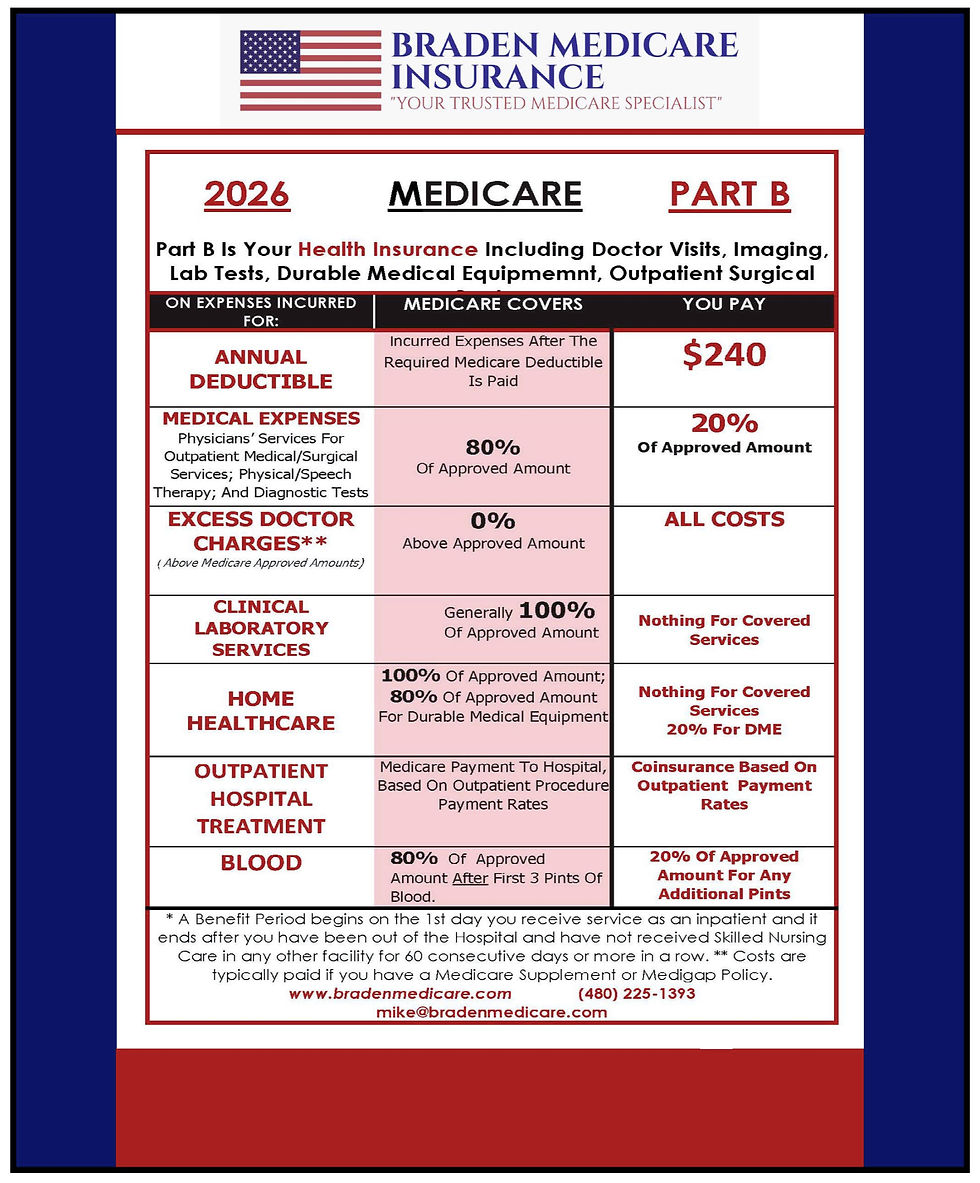
Medicare Part B requires you to meet an annual deductible before you receive coverage. Once you meet your deductible, Medicare Part B covers 80% of your costs, and you pay the remaining 20%. There is no maximum out-of-pocket amount for Medicare Part B, which means there is no cap on your costs.
Unlike Medicare Part A, you must pay your Medicare Part B premium every month, regardless of how long you paid Medicare taxes while working. The standard monthly Medicare Part B premium for 2026 is $202.90. However, this may be higher depending on your adjusted gross monthly income.
Medicare Part B covers all of your Healthcare outside of the Hospital. This includes Doctor visits, Physical Therapy, Lab Work, Durable Medical Equipment, and other related expenses.
Medicare Part B has an Annual deductible of $283 in 2026. After you meet the deductible, all of your remaining Part B costs are covered by Medicare.
Please refer to the Chart below to see what is covered under Medicare Part B.
WHAT IS MEDICARE PART C aka MEDICARE ADVANTAGE

Medicare Part C is otherwise known as Medicare Advantage. Private insurance companies that are approved by Medicare offer Medicare Advantage plans. If you enroll in Medicare Part C, it will become your primary coverage over Original Medicare.
Medicare Advantage plans combine Medicare Part A and Part B coverage with additional benefits to provide you with an all-in-one plan. However, carriers offering these plans have the authority to choose the co-payments, deductibles, and maximum out-of-pocket limits.
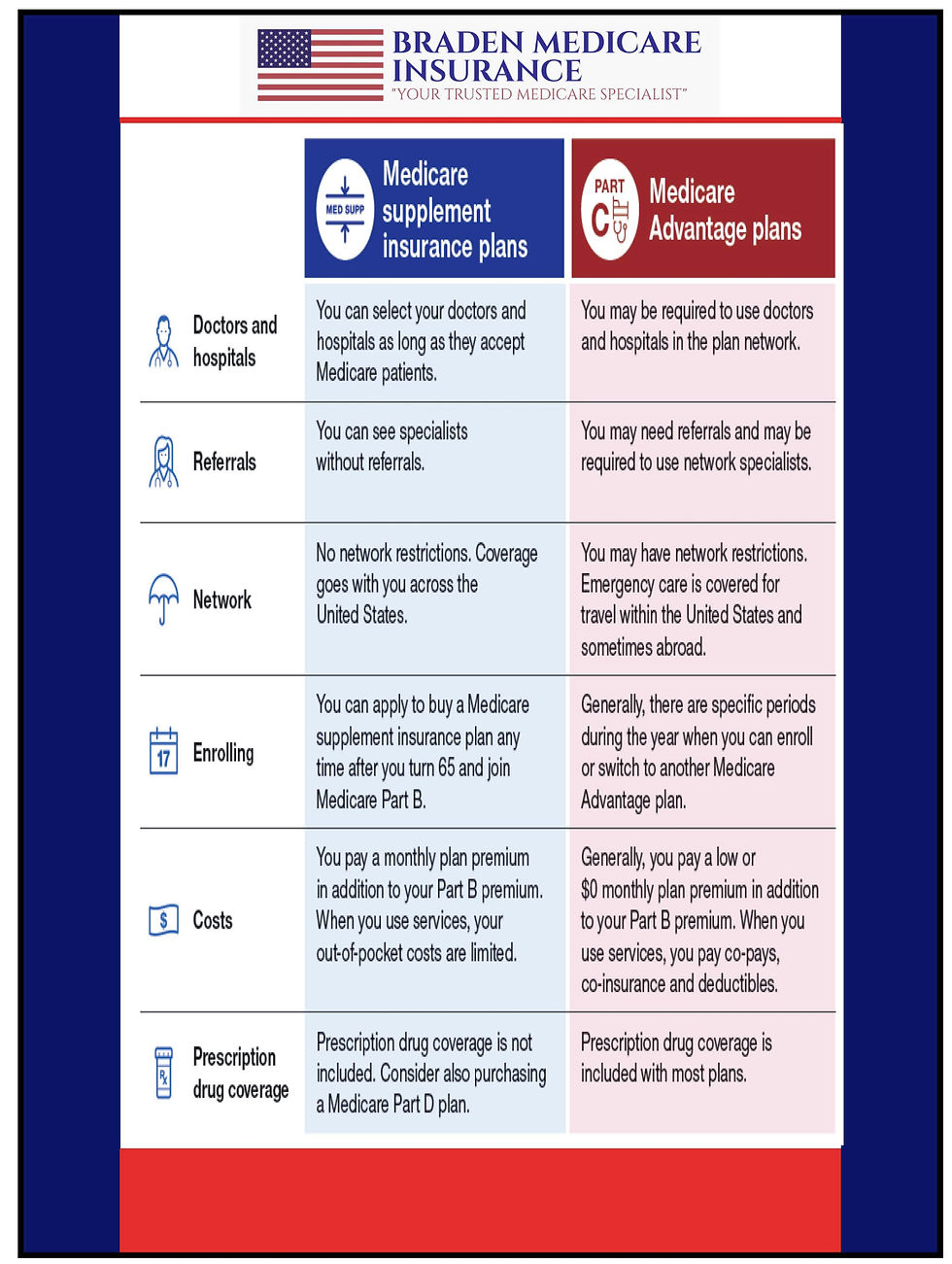
Additionally, Medicare Part C may provide coverage for hearing, vision, and dental care, as well as transportation and gym membership. These benefits are not available with Original Medicare.
Medicare Part C plans have low premiums – many at $0. However, even with a low monthly premium, you may still incur higher out-of-pocket costs under Medicare Part C due to its high cost-sharing limits. Additionally, you will still need to pay the Medicare Part B deductible when you have Medicare Advantage coverage.

WHAT IS MEDICARE PART D
Medicare Part D is prescription drug coverage. This part of Medicare helps cover the costs of medications your physician may prescribe for you to take at home. Private insurance companies approved by Medicare offer Medicare Part D plans.
If you have Original Medicare, it is essential to enroll in a Medicare Part D plan to receive prescription drug coverage. If you delay enrollment in Medicare Part D and do not have creditable drug coverage, you may need to pay the Medicare Part D penalty in the future.
The average Medicare Part D plan in 2026 costs $46.00 per month. However, some plans cost as little as $0 in certain areas. It is crucial to obtain drug coverage, as we never know when we will require medications to maintain our health.
ARE MEDICARE SUPPLEMENT PLANS PART OF MEDICARE?
Medicare Supplement (Medigap) plans are not an official part of Medicare. However, they are made to be secondary to your Original Medicare coverage.
Medicare Supplement plans are federally standardized to match specific criteria. Thus, the same policy, regardless of the carrier, must provide you with the same benefits.
Typically, there are 11 standardized Medicare Supplement plans available in most states. However, not every option may be available to you. You must ensure that you meet the qualifications before enrolling. Each plan has its own set of benefits to help you cover your healthcare costs.
Because Original Medicare covers only 80% of your costs, Medigap plans fill the coverage gap.

Keep in mind that if you enroll in Medicare Part C, you cannot enroll in a Medicare Supplement. Therefore, it is crucial to compare all available coverage options to ensure you select the most suitable one for your needs.
Like Medicare Part C, Medicare Supplement plans require a monthly premium to maintain coverage. Monthly premium prices can range from $50 to $450, depending on the plan.
WHAT IS NOT COVERED BY ORIGINAL MEDICARE?
The four parts of Medicare do not cover everything. Medicare Part C can cover many benefits that Original Medicare does not.
Services not typically covered by Medicare include:
· Hearing aids and hearing exams
· Most dental care/dentures
· Long-term custodial care
· Routine eye exams/glasses
· Cosmetic surgery
· Acupuncture
· Routine foot care
If you have Original Medicare, you can still enjoy most of these services by enrolling in a stand-alone plan to cover the benefits you desire.
MEDICARE ELIGIBILITY & ENROLLMENT IN MEDICARE
Not everyone can obtain Medicare coverage. You must meet specific criteria to be eligible for the federal health program.
You must meet at least one of the following:
· Age 65 or older
· Receive Social Security Disability Income (SSDI) for 24 months
· Diagnosed with ALS or ESRD
Additionally, you must be a U.S. citizen for at least 5 years. Many people automatically enroll in Original Medicare when they turn 65. However, you may need to enroll in Medicare through the Social Security Administration. If you are not receiving Social Security benefits when you enroll in Medicare, this will be the case for you. Enroll as soon as you become eligible to avoid future late enrollment penalties.
ARE YOU NEW TO MEDICARE?
If you are new to Medicare or recently eligible for the federal health program, you should begin by enrolling in Original Medicare. Typically, those new to Medicare enroll in Original Medicare on their 65th birthday. Around this time, you get an Initial Enrollment Period when you can enroll in Medicare Part A and Part B.

Remember, enrollment in Original Medicare coverage is not mandatory when you are first eligible – or ever. However, if you do not enroll or have creditable coverage in the meantime, you must pay a penalty if you eventually enroll in Original Medicare.
For most, Medicare Part A has a $0 monthly premium. If you work at least ten years in the U.S., paying Medicare taxes, you will not owe a Medicare Part A premium as long as you have this coverage.
On the other hand, Medicare Part B requires a premium for all participants. In 2026, the base Medicare Part B premium is $202.90. However, this may increase as your income rises. Higher earners may need to pay a higher Medicare Part B premium. On the other hand, those with lower incomes may qualify for assistance programs that partially or fully cover their Medicare Part B premium.
ABOUT MEDIGAP/MEDICARE SUPPLEMENT PLANS
After you enroll in Original Medicare, you have the chance to pair this coverage with a Medicare Supplement plan. Medicare Supplement plans pay secondary to Original Medicare, filling coverage gaps and covering out-of-pocket costs. When you are new to Medicare, you may not understand all the costs associated with Original Medicare. These costs change annually, so it is essential to stay as up to date as possible.
Medicare Part A requires you to pay a per-occurrence deductible and per-day copayments when you stay in the hospital past the allowed number of days.
Meanwhile, you must pay an annual deductible and a 20% coinsurance on Medicare Part B.
This is where Medicare Supplement (Medigap) plans can help significantly. These plans help alleviate out-of-pocket costs, making your healthcare more affordable.
When you are new to Medicare, you receive a Medicare Supplement Open Enrollment Period. This means that you can enroll in any Medigap plan, regardless of your pre-existing conditions.
Your open enrollment window for Medigap is unique to you, but it lasts only 6 months. After that, you can still enroll in a Medigap plan at any time; however, you will need to undergo medical underwriting. Therefore, it is essential to enroll in a Medicare Supplement plan as soon as you become eligible. It may be your only opportunity.
Once you have a Medigap plan, you can receive care from any health professional who accepts Original Medicare. Because benefits are standardized, your carrier doesn't affect which doctors you can visit. Additionally, you will never require a referral to see a specialist.
ABOUT MEDICARE ADVANTAGE PLANS

If you choose not to enroll in a Medicare Supplement plan, the next best option is a Medicare Advantage plan. However, you cannot enroll in both plan types at the same time. You must only choose one.
Medicare Advantage, also known as Medicare Part C, is an all-in-one Medicare plan that provides additional benefits beyond Original Medicare. These benefits may include dental, prescription, hearing, vision, and transportation coverage, as well as gym memberships and other benefits.
Enrolling in a Medicare Advantage plan often incurs no additional monthly cost. However, you must still pay your Medicare Part B premium each month.
Additionally, these plans usually have higher maximum out-of-pocket limits. These limits can be as high as $10,000 or more if you go out of network.
This coverage type is often more restrictive than Medicare Supplement plans, so more clients tend to enroll in a Medigap plan to save money over time.
Hopefully you now feel more familiar with the different parts of Medicare and what each includes. We understand it can be overwhelming and confusing at first, so we’re here to help you find the information you or your loved ones need.
Not only are we an online Medicare learning resource, but we can also help you find the best rates for the coverage types listed above!
WRAPPING THINGS UP
We hope you enjoyed reading about how cancer treatments and cancer medications are covered under Medicare Advantage and Original Medicare. If you ever have any questions about coverage, we always encourage Medicare beneficiaries to reach out to their Medicare Broker. If you do not have a broker, please reach out to us, and we will be glad to help you find a new Medicare Broker in your area. You can call or text Michael at (480) 225-1393, email him at mike@bradenmedicare.com, or visit our website www.bradenmedicare.com and complete a Contact Us form.


